


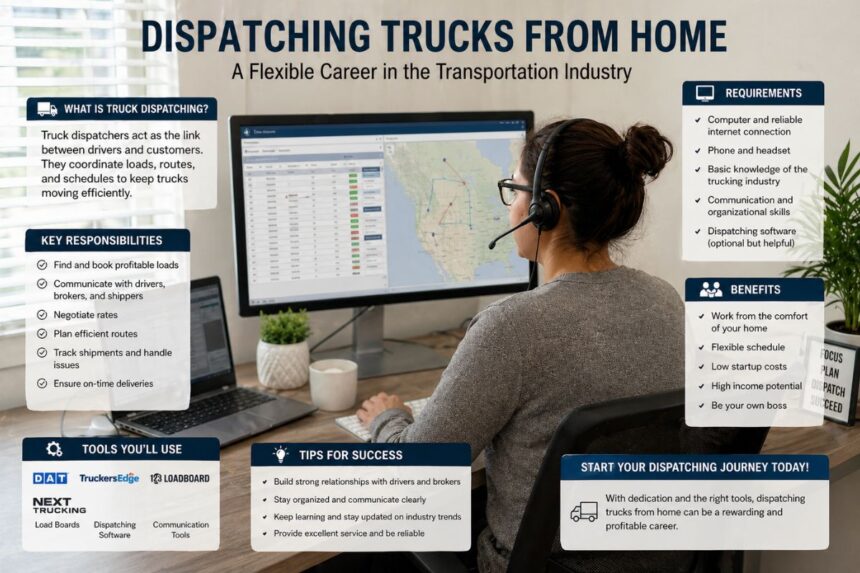
Introduction to Dispatching Trucks from Home: Imagine waking up, grabbing your morning coffee, and heading to your home office to start a day filled with logistics challenges. Dispatching trucks from home has become an increasingly popular career choice for those looking to blend flexibility with opportunity in the logistics industry. With the rapid growth of e-commerce and transport services, skilled dispatchers are more crucial than ever.
- The Growing Demand for Dispatchers in the Logistics Industry
- Advantages of Working as a Remote Dispatcher
- Skills and Qualifications Needed for Remote Dispatching Trucks from Home
- Technology and Tools for Efficient Truck Dispatching
- How to Get Started with Dispatching Trucks from Home
- Challenges and Tips for Success as a Remote Dispatcher
- Conclusion
But what does it really mean to be a remote dispatcher? How do you navigate this bustling field from the comforts of your living room? Whether you’re seeking a new career path or exploring side gig options, understanding how dispatching Trucks from Home works can open doors to earning potential you might not have considered before. Let’s dive into this exciting world where technology meets transportation!
The Growing Demand for Dispatchers in the Logistics Industry
The logistics industry is experiencing a remarkable shift. As e-commerce surges, the need for efficient transportation skyrockets. This creates an increasing demand for skilled dispatchers.
Dispatchers play a vital role in ensuring that shipments arrive on time and without complications. They coordinate routes, manage schedules, and communicate with drivers to streamline operations.
With more companies relying on just-in-time delivery models, the pressure on dispatchers intensifies. Each successful delivery can influence customer satisfaction significantly.
Additionally, as technology advances, new opportunities arise within this field. Remote work options are becoming more commonplace, allowing individuals to step into dispatcher roles from home.
This growing sector not only presents job security but also offers avenues for career advancement. Those who adapt quickly to changes will find themselves in high demand across various logistics sectors.
Advantages of Working as a Remote Dispatcher
Working as a remote dispatcher offers unparalleled flexibility. You can set your schedule around personal commitments, making it easier to achieve work-life balance.
Cost savings are another significant advantage. Without commuting expenses or the need for professional attire, you can reduce daily costs significantly. This position allows you to invest those savings elsewhere.
Additionally, remote dispatching Trucks from Home opens doors to opportunities across various locations. You aren’t limited by geography and can work with companies nationwide or even internationally.
The role also fosters independence. With minimal supervision, you’re empowered to make decisions quickly and efficiently while managing logistics challenges in real-time.
Being at home provides a comfortable environment tailored to your working style, enhancing productivity and focus throughout your day.
Skills and Qualifications Needed for Remote Dispatching Trucks from Home
To succeed in dispatching trucks from home, certain skills and qualifications stand out. Strong communication abilities are essential. Dispatchers must convey information clearly to drivers and clients.
Organizational skills also play a crucial role. Keeping track of multiple shipments requires attention to detail and the ability to prioritize tasks effectively.
Familiarity with logistics software is another key component. Understanding industry-specific tools can streamline operations and enhance efficiency.
Additionally, problem-solving skills come into play frequently. Every day presents unique challenges that require quick thinking and adaptability.
A basic knowledge of transportation regulations helps ensure compliance within the industry. This understanding fosters smoother operations while protecting your business reputation.
Having good customer service skills can strengthen relationships with both drivers and clients alike, paving the way for future opportunities in this dynamic field.
Technology and Tools for Efficient Truck Dispatching
Embracing technology is crucial for anyone dispatching trucks from home. The right tools can streamline operations, enhance communication, and increase productivity.
Transportation management systems (TMS) are essential software that helps organize and manage logistics effectively. These platforms often include features like route optimization, load tracking, and performance analytics.
Mobile applications play a significant role as well. They enable real-time updates for both dispatchers and drivers. This immediacy ensures everyone stays informed about changing schedules or unexpected delays.
Communication tools such as Slack or Microsoft Teams foster collaboration within teams. Quick messaging allows for faster decision-making during high-pressure situations.
Additionally, GPS tracking systems provide invaluable insights into vehicle locations. Dispatchers can monitor routes in real time to ensure timely deliveries while improving fuel efficiency through optimized routing strategies.
How to Get Started with Dispatching Trucks from Home
Getting started with dispatching trucks from home requires a clear plan. First, you need to familiarize yourself with the logistics industry. Research how freight movement works and understand the roles of shippers and carriers.
Next, consider taking an online course focused on truck dispatching. Many platforms offer specialized training that covers essential topics like load boards, regulations, and negotiation techniques.
Once you’ve built your foundational knowledge, invest in reliable software tools designed for dispatchers. These tools can streamline communication between drivers and clients while helping you manage loads effectively.
Networking is also crucial in this field. Join online forums or social media groups dedicated to trucking professionals. Engaging with experienced dispatchers can provide valuable insights into best practices.
Start small by partnering with local trucking companies or independent owner-operators to gain hands-on experience while building your reputation in the industry.
Challenges and Tips for Success as a Remote Dispatcher
Working as a remote dispatcher can be rewarding, but it comes with its challenges. One of the biggest hurdles is managing time effectively. With multiple shipments and deadlines to juggle, staying organized is crucial.
Communication issues may arise when coordinating with drivers and clients. Clear channels are essential; using tools like messaging apps can help bridge any gaps.
Moreover, technology malfunctions can disrupt operations. Always have backup systems in place to minimize downtime. To thrive, build strong relationships within your network. Networking with other dispatchers can provide insights and support that lead to better decision-making.
Stay informed about industry trends too. Continuous learning will keep you ahead of the curve and improve your efficiency. Maintaining work-life balance is vital for long-term success. Set boundaries to avoid burnout while ensuring high performance in your role as a remote dispatcher.
Conclusion
The logistics industry is evolving, and dispatching trucks from home offers a unique opportunity for those looking to enter this field. As demand increases, more individuals are finding remote dispatching an appealing career choice. By honing the necessary skills and utilizing modern technology, anyone can thrive in this role.
Becoming proficient as a remote dispatcher requires dedication and ongoing learning. While there may be challenges along the way, developing strategies to overcome them can lead to significant rewards. Embrace flexibility and adaptability in your approach; these qualities will serve you well.
For those interested in making their mark within the logistics landscape, dispatching trucks from home presents a viable path forward. It’s time to explore your potential in this dynamic sector that continues to grow each day.