


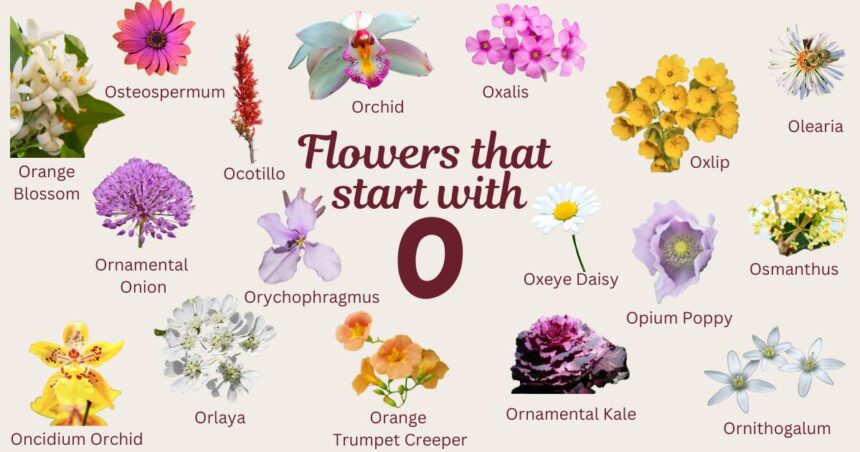
From delicate orchids to cheerful oxalis, flowers that start with O offer stunning variety for any garden or indoor space. Whether you’re looking to add unique blooms to your landscape or simply curious about botanical names, this guide covers 15 gorgeous flowers that start with O—complete with growing tips to help them thrive.
- 1. Orchid (Orchidaceae)
- 2. Oriental Lily (Lilium orientalis)
- 3. Oxalis (Oxalis spp.)
- 4. Orange Blossom (Citrus × sinensis)
- 5. Oleander (Nerium oleander)
- 6. Obedient Plant (Physostegia virginiana)
- 7. Ornithogalum (Ornithogalum spp.)
- 8. Oswego Tea (Monarda didyma)
- 9. Oxford Blue Muscari (Muscari armeniacum)
- 10. Ostrich Fern (Matteuccia struthiopteris)
- 11. Orange Daylily (Hemerocallis fulva)
- 12. Ornamental Onion (Allium spp.)
- 13. Oxeye Daisy (Leucanthemum vulgare)
- 14. Orange Trumpet Vine (Campsis radicans)
- 15. October Daphne (Sedum sieboldii)
- Choosing the Right O Flower for Your Garden
- Create Your Own O Flower Collection
Let’s explore these exceptional plants and discover which ones deserve a spot in your collection.
1. Orchid (Orchidaceae)
Orchids are among the most diverse and elegant flowering plants, with over 25,000 species spanning nearly every color imaginable. These exotic beauties range from tiny ground-dwelling varieties to dramatic epiphytes that grow on trees.
Growing Tips:
- Provide bright, indirect light—east or west-facing windows work best
- Water when the potting medium is nearly dry (typically once a week)
- Use orchid-specific potting mix with good drainage
- Maintain humidity levels between 40-70%
- Fertilize monthly during growing season with diluted orchid fertilizer
Best for: Indoor gardeners and those seeking show-stopping blooms
2. Oriental Lily (Lilium orientalis)
Oriental lilies captivate with their large, fragrant flowers start with o and graceful appearance. These perennials bloom in mid to late summer, producing spectacular white, pink, or red blossoms with speckled throats.
Growing Tips:
- Plant bulbs in fall or early spring in well-draining soil
- Choose a location with full sun to partial shade
- Space bulbs 12-18 inches apart, planted 6 inches deep
- Water regularly but avoid waterlogged conditions
- Apply mulch to keep roots cool and retain moisture
Best for: Cut flower gardens and adding fragrance to outdoor spaces
3. Oxalis (Oxalis spp.)
Also known as wood sorrel or shamrock plants, oxalis produces cheerful blooms above distinctive clover-like foliage. The leaves often fold at night, creating an engaging display.
Growing Tips:
- Thrives in bright, indirect light indoors or partial shade outdoors
- Keep soil evenly moist during active growth
- Allow the plant to go dormant after blooming by reducing water
- Plant bulbs 3-4 inches apart at a depth of 1-2 inches
- Protect from harsh afternoon sun in hot climates
Best for: Container gardens and ground cover in shaded areas
4. Orange Blossom (Citrus × sinensis)
The fragrant white flowers that start with o of orange trees are beloved for their intoxicating scent and symbolic association with purity. These blossoms appear before developing into the familiar citrus fruit.
Growing Tips:
- Requires full sun (at least 6-8 hours daily)
- Plant in well-draining, slightly acidic soil
- Water deeply but infrequently, allowing soil to dry between waterings
- Fertilize with citrus-specific fertilizer during growing season
- Protect from frost; grow in containers in cold climates
Best for: Warm climate gardens and greenhouse cultivation
5. Oleander (Nerium oleander)
Oleander produces abundant clusters of flowers start with o in shades of pink, red, white, or yellow. This evergreen shrub blooms prolifically from spring through fall, making it a landscape favorite in warm regions.
Growing Tips:
- Plant in full sun for maximum blooming
- Tolerates poor soil but prefers well-draining conditions
- Extremely drought-tolerant once established
- Prune in early spring to maintain shape
- Warning: All parts are highly toxic—handle with care and keep away from children and pets
Best for: Low-maintenance landscaping in Mediterranean and subtropical climates
6. Obedient Plant (Physostegia virginiana)
Named for its unique hinged flowers that start with o stay in place when moved, the obedient plant produces tall spikes of pink, purple, or white tubular blooms. This North American native attracts pollinators throughout summer.
Growing Tips:
- Grows well in full sun to partial shade
- Prefers consistently moist soil
- Space plants 18-24 inches apart
- Can spread aggressively; consider planting in containers or using barriers
- Cut back after first frost
Best for: Pollinator gardens and naturalized areas
7. Ornithogalum (Ornithogalum spp.)
Commonly called Star of Bethlehem, ornithogalum produces star-shaped white flowers that start with o distinctive green stripes. These bulbs create striking displays in spring gardens.
Growing Tips:
- Plant bulbs in fall, 3-4 inches deep
- Requires full sun to partial shade
- Well-draining soil is essential
- Water moderately during growth; reduce after flowering
- Some species can be invasive—check local guidelines
Best for: Spring bulb displays and cutting gardens
8. Oswego Tea (Monarda didyma)
Also known as bee balm, Oswego tea produces shaggy, tubular flowers that start with o in vibrant shades of red, pink, purple, or white. This native perennial is a magnet for hummingbirds and butterflies.
Growing Tips:
- Plant in full sun to partial shade
- Prefers rich, moist soil
- Space plants 18-24 inches apart for air circulation
- Divide clumps every 2-3 years to maintain vigor
- Deadhead spent blooms to encourage continued flowering
Best for: Wildlife gardens and herb gardens (leaves make fragrant tea)
9. Oxford Blue Muscari (Muscari armeniacum)
These charming spring bulbs produce dense clusters of tiny, bell-shaped flowers that start with o in deep blue. Often called grape hyacinths, they naturalize easily and return reliably year after year.
Growing Tips:
- Plant bulbs in fall, 3 inches deep and 3 inches apart
- Thrives in full sun to partial shade
- Requires well-draining soil
- Allow foliage to die back naturally after blooming
- Minimal maintenance once established
Best for: Edging, rock gardens, and naturalizing under trees
10. Ostrich Fern (Matteuccia struthiopteris)
While technically a fern rather than a flowering plant, ostrich ferns produce distinctive fertile fronds that resemble ostrich plumes. These elegant plants add texture and movement to shade gardens.
Growing Tips:
- Plant in partial to full shade
- Requires consistently moist, rich soil
- Space plants 2-3 feet apart
- Spreads via underground rhizomes
- No fertilizer needed in rich soil
Best for: Shade gardens and woodland settings
11. Orange Daylily (Hemerocallis fulva)
The classic orange daylily is a hardy, vigorous perennial that produces trumpet-shaped blooms throughout summer. Each flower lasts only one day, but plants produce numerous buds for continuous color.
Growing Tips:
- Grows in full sun to partial shade
- Tolerates various soil types
- Water regularly during first year; drought-tolerant once established
- Divide clumps every 3-4 years
- Remove spent flowers to keep plants tidy
Best for: Low-maintenance borders and naturalizing
12. Ornamental Onion (Allium spp.)
Ornamental alliums produce spectacular spherical flower heads atop tall stems. These architectural plants create dramatic focal points in late spring and early summer gardens.
Growing Tips:
- Plant bulbs in fall, 4-8 inches deep depending on size
- Requires full sun and well-draining soil
- Space according to variety (typically 6-12 inches apart)
- Allow foliage to yellow before removing
- Deer and rodent resistant
Best for: Adding height and structure to perennial borders
13. Oxeye Daisy (Leucanthemum vulgare)
The classic oxeye daisy features cheerful white petals surrounding a golden center. This hardy perennial blooms profusely from late spring through summer.
Growing Tips:
- Plant in full sun
- Adapts to various soil types with good drainage
- Space plants 12-18 inches apart
- Deadhead regularly to prolong blooming
- Can self-seed aggressively; deadhead to control spread
Best for: Cottage gardens and wildflower meadows
14. Orange Trumpet Vine (Campsis radicans)
This vigorous climbing vine produces clusters of orange-red, trumpet-shaped flowers that start with o hummingbirds adore. It blooms from summer through fall, creating a spectacular display.
Growing Tips:
- Plant in full sun for best flowering
- Tolerates poor soil but prefers well-draining conditions
- Provide sturdy support for climbing
- Prune heavily in late winter to control growth
- Can be invasive; plant with caution
Best for: Covering fences, arbors, and pergolas
15. October Daphne (Sedum sieboldii)
October daphne, a type of sedum, produces clusters of pink flowers in late summer and fall. The blue-green, scalloped leaves create interest even when not in bloom.
Growing Tips:
- Requires full sun to partial shade
- Plant in well-draining soil
- Extremely drought-tolerant
- Cut back in spring before new growth
- Excellent in containers or rock gardens
Best for: Late-season color and succulent gardens
Choosing the Right O Flower for Your Garden
When selecting flowers that start with O for your space, consider these factors:
Climate compatibility: Research your USDA hardiness zone and choose plants rated for your area. Orchids and orange blossoms thrive in warm climates, while obedient plants and oxeye daisies handle cold better.
Light requirements: Match plants to available light. Orchids and oxalis prefer indirect light, while oleanders and ornamental onions need full sun.
Maintenance level: Some O flowers like daylilies require minimal care, while orchids demand more attention. Choose plants that fit your gardening schedule.
Garden purpose: Consider whether you need ground cover (oxalis), vertical interest (trumpet vine), or cut flowers (oriental lilies).
Create Your Own O Flower Collection
Flowers that start with O offer remarkable diversity—from the sophisticated elegance of orchids to the wild beauty of ornamental onions. Whether you’re cultivating an indoor orchid collection or planning a pollinator-friendly outdoor garden, these plants provide options for every skill level and climate.
Start with one or two varieties that match your growing conditions, then expand your collection as you gain confidence. With proper care and attention to their specific needs, these beautiful blooms will reward you with stunning displays season after season.