




Introduction to Carpenter Ant Spray and Its Harmful Effects: Carpenter ants can be a homeowner’s worst nightmare. These little invaders may seem harmless at first, but they have the potential to cause significant damage to your property. Unlike termites, which consume wood, carpenter ants excavate it to create their nests. This behavior can lead to structural weaknesses if left unchecked.
If you’ve spotted these pests scurrying around, it’s crucial to take action quickly. Understanding how to effectively use carpenter ant spray is vital for eliminating them and preventing further infestations. In this guide, we’ll cover everything you need to know about battling these unwelcome guests in your home. Whether you’re facing a minor annoyance or a full-blown infestation, we’ve got tips that will help you reclaim your space with confidence!
Types of Carpenter Ant Sprays
Carpenter ant sprays come in various formulations, each designed to tackle infestations effectively. One of the most common types is contact spray. This method kills ants on contact, providing quick results for visible pests.
Another option is residual spray. It leaves a long-lasting barrier that continues to work even after application. Ants walking through treated areas are exposed to its effects, ensuring ongoing protection.
Some products focus on bait formulations rather than traditional sprays. These attract ants and allow them to carry poison back to their colony, targeting the entire nest over time.
Natural alternatives are also available for those who prefer eco-friendly solutions. These often utilize plant-based ingredients less harmful to humans and pets while still deterring pests.
Choosing the right type depends on your specific needs and preferences when dealing with carpenter ants in your home or garden.
Step-by-Step Guide on Using Carpenter Ant Spray
Before applying carpenter ant spray, ensure you have the right product. Read labels carefully to understand active ingredients and application instructions.
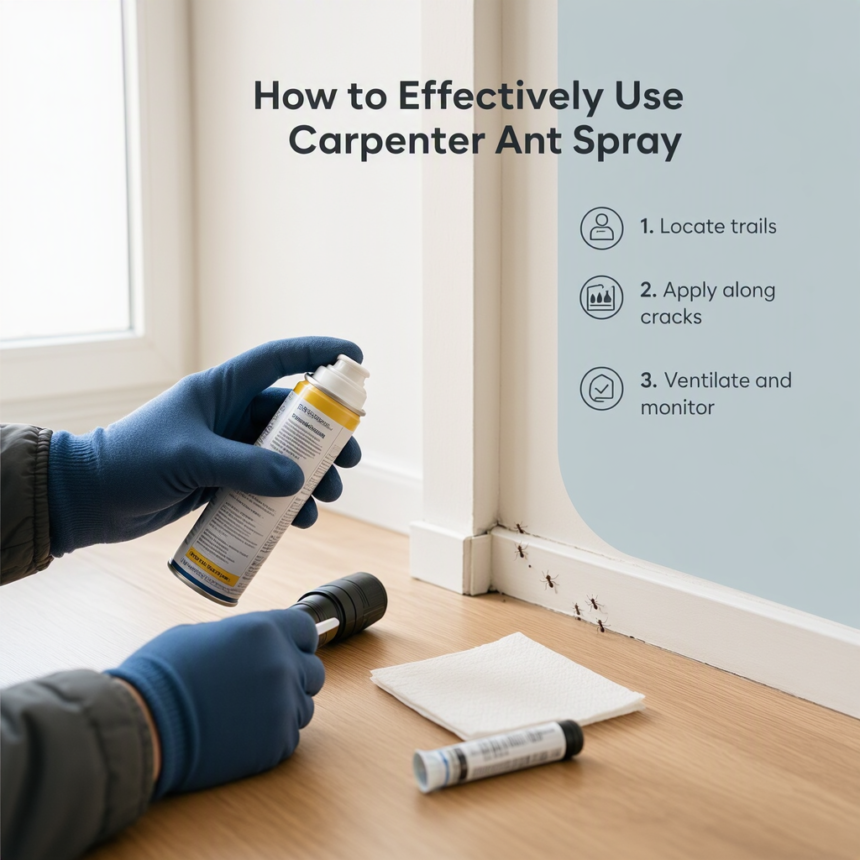
Start by identifying the infestation areas. Look for trails or nests, typically found in wood structures. Make note of these spots for targeted treatment.
Wear protective gear like gloves and a mask. Safety is key when dealing with chemicals. Shake the canister well before use. This ensures an even distribution of the product.
Aim at entry points and visible ants directly. Spray in short bursts, maintaining distance as recommended on the label. After spraying, keep pets and children away from treated areas until dry. It’s crucial to allow adequate time for effectiveness without interference.
Monitor affected areas regularly post-application to assess if further action is necessary. If you continue seeing activity, consider reapplying after a few days as suggested on your product’s instructions.
Precautions and Safety Measures
When using carpenter ant spray, safety should always be a top priority. Start by reading the product label carefully. It contains essential instructions and warnings that are crucial for effective use.
Wear protective gear like gloves and goggles to shield yourself from potential splashes. This is especially important if you have sensitive skin or respiratory issues.
Ensure proper ventilation in your workspace. Open windows and use fans to circulate air, reducing inhalation of harmful chemicals while applying the spray.
Keep pets and children away during application. It’s best to limit their exposure until the area has dried completely.
Never mix different pest control products unless specifically directed on the label. Combining substances can create dangerous reactions, compromising both safety and efficacy.
Store any leftover spray securely out of reach from children and animals to avoid accidental ingestion or misuse.
Alternative Methods of Carpenter Ant Control
When dealing with carpenter ants, exploring alternative control methods can be effective and environmentally friendly. One popular option is using natural deterrents like diatomaceous earth. This powdery substance disrupts the exoskeleton of insects, leading to dehydration.
Essential oils also serve as a powerful repellent. Oils such as peppermint or tea tree oil can deter carpenter ants when mixed with water and sprayed around entry points or nests.
Setting up bait stations filled with sugar water mixed with boric acid offers another strategic approach. The sugar attracts the ants while the boric acid gradually eliminates them without exposing your home to harsh chemicals.
Traps made from simple household items can capture wandering ants before they reach their nests inside your walls. Maintaining cleanliness by sealing food sources and fixing leaks can further discourage these pests from setting up shop in your home.
Additional Tips for Preventing Carpenter Ant Infestations
To keep carpenter ants at bay, maintaining a clean environment is essential. Regularly sweep and vacuum to eliminate food particles that attract them.
Seal all cracks and crevices in your home’s foundation. Carpenter ants can easily enter through the tiniest openings.
Consider storing firewood away from your home’s exterior. It should be elevated and covered to deter these pests from nesting nearby.
Inspect trees or shrubs close to your property for signs of infestation. Trim branches that touch your home, as they provide easy access for ants.
Maintain low moisture levels indoors by fixing leaks promptly. Carpenter ants thrive in damp conditions, so ensure proper ventilation in basements and attics to discourage their presence.
Conclusion
Carpenter ants can be a significant nuisance, causing damage to your home and leading to costly repairs. Using carpenter ant spray effectively is crucial in managing these pests. Choose the right type of spray for your needs, follow the application steps carefully, and always prioritize safety.
To prevent future infestations, consider additional control methods like baiting or employing professional pest services if necessary. Keeping your environment clean and maintaining wood structures will further deter these unwanted visitors.
By staying vigilant and proactive, you can protect your home from carpenter ants while ensuring peace of mind. Implement these strategies today for a pest-free tomorrow!