




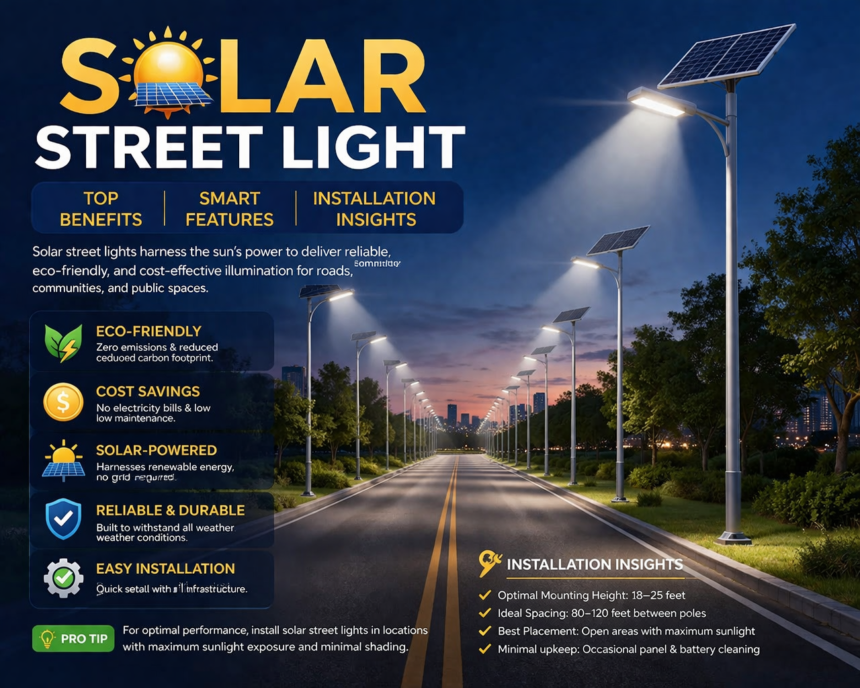
Introduction to Solar Street Light: Imagine walking down a well-lit street at night, where the lights shine brightly without consuming any electricity from the grid. This isn’t a scene from a futuristic movie; it’s the reality brought to life by solar street lights. As cities evolve and seek sustainable solutions, solar-powered lighting is emerging as an innovative alternative to traditional streetlights.
Solar street lights harness energy directly from the sun, making them not only eco-friendly but also cost-effective in the long run. With advances in technology and design, these lights are becoming increasingly popular for urban planning and development projects. Join us as we explore what solar street lights are all about, their numerous benefits, essential installation insights, and how they can transform our communities for better sustainability.
What is a Solar Street Light?
A solar street light is an innovative lighting solution that harnesses the power of sunlight to illuminate public spaces. Equipped with photovoltaic panels, these lights capture solar energy during the day. This energy is then stored in batteries for use at night.
Solar street lights have no reliance on traditional electrical grids, making them ideal for remote areas or locations where electricity supply is unreliable.
They come in various designs and sizes, catering to different needs and aesthetics. With advancements in technology, many models now include features like motion sensors and LED bulbs for enhanced efficiency.
These systems not only provide illumination but also promote sustainability by reducing carbon footprints. As cities worldwide look to become greener, solar-street lights are becoming a popular choice for urban planners aiming to create eco-friendly environments.
Benefits of Using Solar Street Lights
Solar street lights come with a myriad of advantages that make them an appealing choice for public and private spaces alike. One primary benefit is their energy efficiency. By harnessing solar power, these lights reduce reliance on traditional electricity sources, leading to significant savings on utility bills.
They also promote environmental sustainability. With no fossil fuels involved, solar-street lights help lower carbon emissions and contribute to cleaner air quality. Another advantage is ease of installation. Without the need for complex wiring or extensive infrastructure, they can be set up quickly in various locations.
Moreover, maintenance costs are typically lower due to fewer moving parts and longer-lasting LED technology. This means reduced upkeep over time. Solar street lights enhance safety by providing reliable illumination in dark areas while being independent from the grid during power outages.
Cost Savings and Environmental Impact
Switching to solar street lights can lead to substantial cost savings. Traditional street lighting relies heavily on electricity from fossil fuels, which can be expensive. Solar-street lights harness sunlight, reducing energy costs significantly.
Maintenance expenses also drop when using solar technology. These systems often have long-lasting LED bulbs and fewer moving parts, leading to lower repair needs over time.
From an environmental perspective, the benefits are clear. Solar street lights help decrease carbon emissions by relying solely on renewable energy. This shift contributes positively to the planet’s health while promoting sustainable urban development.
Moreover, as cities embrace greener initiatives, installing solar lamps enhances their image as eco-friendly locations that prioritize sustainability. A brighter future for both communities and our environment begins with these innovative solutions.
Factors to Consider Before Installing Solar Street Lights
Before installing solar street lights, it’s essential to evaluate your specific needs. Assess the area where you intend to install them. Consider factors like foot traffic, local crime rates, and lighting requirements.
Next, examine the geographical location. Is there ample sunlight throughout the year? Locations with consistent sunshine maximize energy efficiency and ensure reliable performance.
Budget plays a crucial role too. While initial costs may be higher than traditional options, long-term savings on electricity bills can make up for it over time.
Check local regulations regarding installations. Some areas have guidelines that dictate how and where solar lights can be placed.
Consider maintenance needs. Modern solar street lights are designed for durability but knowing what upkeep is necessary will help in long-term planning.
Installation Process and Tips
Installing solar street lights is a straightforward process, but attention to detail is key. Begin by selecting the right location. Ensure that there’s ample sunlight exposure for maximum efficiency.
Next, gather necessary tools and materials. You’ll typically need mounting brackets, screws, and sometimes concrete for stability. Make sure your solar panel faces south or west to capture the most sunlight.
When digging post holes, follow local regulations regarding depth and placement. This ensures safety and compliance with standards.
After securing the pole in place, connect wiring as per manufacturer guidelines. It’s important to double-check connections to avoid issues later on.
Once installed, test the system during dusk to ensure proper functioning. Adjust angles if needed for optimal light spread throughout your desired area.
Regular maintenance checks will prolong their lifespan and keep them operating efficiently year-round.
Innovations in Solar Street Light Technology
Recent advancements in solar street light technology are transforming urban landscapes. Smart sensors now enable these lights to adapt brightness based on surrounding activity. This means brighter illumination during peak hours and dimmer settings when streets are quieter, conserving energy effectively.
Integration with IoT is another exciting development. Solar-street lights can communicate with city management systems, providing real-time data on energy usage and performance. Such connectivity enhances maintenance efficiency by alerting authorities about potential issues.
Moreover, many new models feature enhanced battery technologies that extend operating times even in cloudy conditions. These innovations ensure reliable lighting throughout the night while minimizing environmental impact.
Aesthetic designs are also evolving. Sleek structures blend seamlessly into modern architecture while maintaining functionality. With these technological strides, solar street lights not only illuminate pathways but also contribute to smarter cities for future generations.
Conclusion
The advantages of solar street lights extend beyond mere illumination. They offer communities a sustainable solution that promotes safety and efficiency.
With advancements in technology, these systems are becoming more accessible and reliable. Innovations continue to enhance their performance, making them an attractive option for urban and rural areas alike.
As cities aim for greener initiatives, embracing solar street lights can significantly contribute to reducing the carbon footprint. Their potential impact on energy consumption is noteworthy.
Communities are encouraged to explore this transformative lighting solution. It not only brightens streets but also paves the way toward a more eco-friendly future. Engaging with local experts can help tailor installations to meet specific needs effectively.
Investing in solar street lighting reflects a commitment to sustainability while enhancing public spaces. The journey toward smarter infrastructure begins here, one light at a time.
FAQ’s
What is a solar street light?
A solar street light is an outdoor lighting system that uses solar panels to collect energy from the sun during the day. This energy powers LED lights at night, providing illumination for streets, pathways, and public spaces.
How do solar street lights work?
Solar street lights operate by converting sunlight into electricity through photovoltaic cells. The collected energy charges batteries that power the LED fixtures when it gets dark. Many systems include smart technology for motion sensors or dimming features based on ambient light levels.
Are solar street lights cost-effective?
Yes, they can be quite cost-effective in the long run. While initial installation costs may be higher than traditional lighting options, savings on electricity bills and reduced maintenance costs can offset these expenses over time.
Do I need permits to install solar street lights?
Permit requirements vary by location. It’s essential to check with your local authorities before installation to ensure compliance with zoning laws and regulations regarding public infrastructure.
What are some common applications for solar street lights?
They are commonly used in parks, parking lots, residential neighborhoods, campuses, and remote areas where extending electrical grid lines may not be feasible or economical.
Can I install a solar street light myself?
While DIY installation is possible for those with technical skills, hiring professionals ensures proper setup and alignment of panels for optimal sunlight exposure as well as adherence to local codes.
How long do batteries last in a solar street light?
Most batteries in quality solar street lights last between 3-7 years depending on usage patterns and environmental conditions. Regular maintenance helps prolong battery life significantly.
Are there any incentives available for installing renewable lighting solutions like this?
Many regions offer tax credits or rebates for using renewable energy technologies like solar lighting systems. Check local government websites or consult a renewable energy expert in your area to find applicable programs.