



Introduction to PCB Manufacturing News: The world of electronics is evolving at an astonishing pace, and at the heart of this transformation lies PCB manufacturing. Printed Circuit Boards (PCBs) are essential components in virtually every electronic device we use today, from smartphones to advanced medical equipment. As technology races forward, so too does the need for faster, more efficient methods of production.
- What Is PCB Manufacturing News?
- PCB Manufacturing Process
- The Impact of AI and Automation on PCB Production
- Advancements in High-Speed Circuits and their Role in PCB Manufacturing News
- Potential Benefits and Challenges of Implementing New Technologies
- Case Studies of Companies Using AI, Automation, and High-Speed Circuits in PCB Manufacturing
- The Future Outlook for PCB Manufacturing News: Predictions and Speculations
- Conclusion: Embracing the Future of PCB Manufacturing News
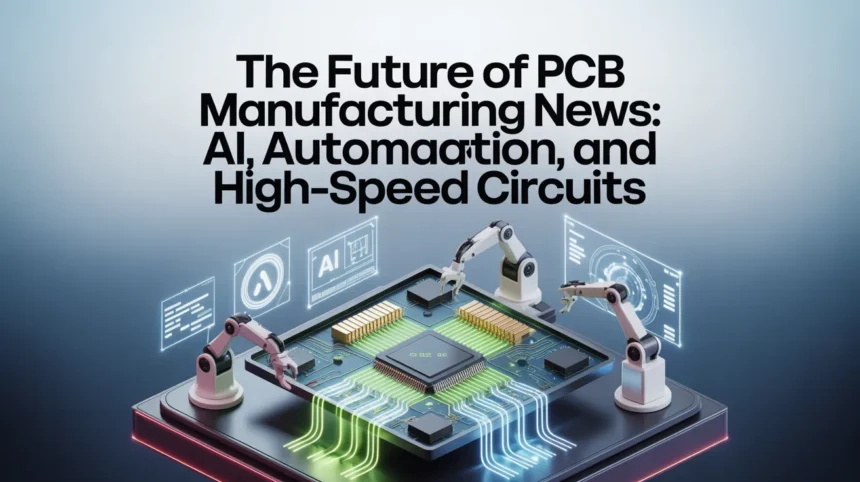
In recent years, innovation has reshaped the landscape of PCB manufacturing News like never before. The integration of Artificial Intelligence (AI), automation technologies, and advancements in high-speed circuits are revolutionizing how these vital systems are designed and produced. This blog explores the latest developments making waves in PCB Manufacturing News—offering insights into what’s ahead as we embrace a future driven by cutting-edge technologies. Get ready to dive into a realm where intelligence meets efficiency!
What Is PCB Manufacturing News?
PCB manufacturing is the process of creating printed circuit boards (PCBs) used to connect and support electronic components in devices such as smartphones, computers, medical equipment, and automotive systems.
The process involves designing circuit layouts, printing conductive pathways, and assembling electronic parts onto the board. Modern PCB manufacturing News uses advanced technologies to improve precision, durability, and performance.
As electronics continue to evolve, PCB manufacturing plays a critical role in powering modern digital devices and industrial systems.
PCB Manufacturing Process

The PCB manufacturing news process involves several important steps to create reliable and functional circuit boards for electronic devices. It begins with designing the circuit layout, followed by printing the design onto copper-clad boards.
Manufacturers then use drilling, etching, and layering techniques to form electrical pathways and component connections.After assembly and soldering, the PCB undergoes testing and quality inspection to ensure proper performance.
This precise process helps produce durable circuit boards used in modern electronics, automotive systems, and industrial equipment.
The Impact of AI and Automation on PCB Production
Artificial Intelligence (AI) and automation are revolutionizing PCB production. They streamline processes that were once labor-intensive and prone to errors. With advanced algorithms, AI can predict equipment failures before they happen.
This proactive maintenance reduces downtime significantly. Automation enhances precision in assembly lines. Robots handle intricate tasks with unmatched accuracy, ensuring high-quality outputs.
Moreover, AI-driven design tools allow engineers to optimize layouts swiftly. Designers now create complex circuits without the lengthy trial-and-error process of the past.
Data analytics plays a pivotal role too. Manufacturers can analyze vast datasets for insights into efficiency and quality control. The integration of these technologies fosters faster turnarounds while lowering costs—a win-win for businesses striving to stay competitive in the evolving landscape of PCB manufacturing news.
Advancements in High-Speed Circuits and their Role in PCB Manufacturing News
High-speed circuits are revolutionizing PCB manufacturing News. They enable faster data processing and improved signal integrity, essential for modern electronics.
These advancements allow manufacturers to meet the growing demands of industries like telecommunications and consumer electronics. With increasing data rates, traditional circuit designs often fall short.
Innovative materials play a crucial role in this evolution. Advanced substrates reduce signal loss and enhance performance at high frequencies, making them indispensable for next-generation devices.
Manufacturers are also adopting specialized design tools that facilitate the development of complex layouts. This streamlining not only boosts efficiency but also enhances accuracy throughout production.
As technology evolves, so does the necessity for robust testing methods. Testing high-speed PCBs requires precision equipment capable of analyzing intricate signals without interference or distortion.
This dynamic landscape continues to push boundaries, ensuring that PCB manufacturing News remains at the forefront of technological progress.
Potential Benefits and Challenges of Implementing New Technologies
The integration of new technologies in PCB manufacturing News presents a wealth of opportunities. Enhanced efficiency is one significant advantage. With AI and automation, processes speed up considerably, reducing production times.
Quality control also benefits greatly from these advancements. Automated inspection systems can detect defects more accurately than the human eye, ensuring higher reliability in final products.
However, challenges accompany these innovations. Initial implementation costs can be daunting for many companies. Investing in cutting-edge technology requires careful financial planning and commitment.
Workforce adaptation poses another hurdle. Employees may need extensive training to operate new systems effectively. This transition period can cause temporary disruptions.
Moreover, reliance on technology raises concerns about cybersecurity threats. As factories become increasingly interconnected, safeguarding sensitive data becomes paramount to prevent breaches that could cripple operations.
Balancing benefits with these challenges will define the future landscape of PCB manufacturing as companies navigate this evolving terrain.
Case Studies of Companies Using AI, Automation, and High-Speed Circuits in PCB Manufacturing
One standout example is a leading electronics manufacturer that integrated AI-driven quality control systems. This technology analyzes production data in real-time, detecting defects with incredible accuracy. The result? A significant drop in waste and improved product reliability.
Another case involves a company that adopted advanced automation for their assembly lines. By utilizing robotic arms equipped with machine learning algorithms, they streamlined processes. This innovation not only boosted efficiency but also reduced labor costs.
In the realm of high-speed circuits, a startup has made waves by developing ultra-fast PCBs tailored for telecommunications. Their commitment to cutting-edge materials ensures minimal signal loss and maximizes performance.
These diverse implementations showcase how different companies are harnessing modern technologies to elevate PCB manufacturing standards. Each success story reflects unique strategies and highlights the exciting potential within this evolving industry landscape.
The Future Outlook for PCB Manufacturing News: Predictions and Speculations
As we look ahead, the landscape of PCB manufacturing News is poised for a significant transformation. Emerging technologies will redefine how we approach design and production.
The integration of AI in decision-making processes suggests that efficiency will skyrocket. We can expect smart systems to optimize workflows, reducing waste and increasing precision.
Moreover, high-speed circuits are on the brink of becoming standard practice. These advancements promise faster data transmission rates, essential for modern devices.
Sustainability trends also play a crucial role in shaping future practices. Manufacturers may prioritize eco-friendly materials and processes to meet regulatory standards and consumer demands.
Collaboration between tech firms could further accelerate innovation within the industry. Shared resources might lead to breakthroughs that were once thought impossible.
This dynamic environment creates opportunities for companies willing to adapt swiftly while pursuing excellence in their PCB manufacturing endeavors.
Conclusion: Embracing the Future of PCB Manufacturing News
The landscape of PCB manufacturing is changing rapidly. As we witness the integration of AI and automation, companies are beginning to realize unprecedented efficiency and accuracy in production processes. These advancements open doors to new possibilities that were once considered futuristic.
High-speed circuits have taken center stage in this evolution. They not only enhance performance but also respond to the growing demand for faster electronics across various industries. Whether it’s consumer gadgets or sophisticated medical devices, high-speed capabilities are becoming a necessity.
However, it’s essential to recognize both the benefits and challenges that come with adopting these technologies. While AI can streamline workflows and reduce errors, it requires investment and skilled personnel who understand how to operate advanced systems effectively.
Several businesses have already started reaping the rewards of integrating AI, automation, and high-speed circuits into their PCB operations. Their success stories serve as inspiration for others looking toward modernization.
As we look ahead, predictions suggest a future filled with innovation in PCB manufacturing News practices. Companies must stay informed about emerging trends if they want to remain competitive in an ever-evolving market.
Embracing these changes will be crucial for growth within the industry. Remaining adaptable ensures that manufacturers can meet customer demands while leveraging cutting-edge technologies efficiently.